
Leave Your Message

Optimized for Ambient Drinking Yogurt

Perfect for Active LAB Beverages

Superior Fruit-Dairy Suspension

For Vegan Acidic Dairy Alternatives
The formulation of acidic dairy beverages, such as drinking yogurts and lactic acid bacteria (LAB) drinks, presents one of the most complex rheological challenges in modern food science. When milk is acidified to a pH below the isoelectric point of casein (typically pH 4.6), the casein micelles lose their electrostatic repulsion. This causes them to aggregate, leading to syneresis (whey separation), graininess, and a complete loss of the smooth, creamy mouthfeel that consumers expect.
To counteract this, the industry relies heavily on a Compound Thickener For Acidic Dairy Beverages. These are highly engineered blends of hydrocolloids—such as High Methoxyl (HM) Pectin, Carboxymethyl Cellulose (CMC), Propylene Glycol Alginate (PGA), and Soybean Polysaccharides. Unlike single-ingredient thickeners, compound formulations leverage molecular synergy. For instance, HM pectin adsorbs onto the surface of casein micelles via electrostatic interaction, providing steric hindrance that prevents aggregation. Meanwhile, CMC increases the viscosity of the continuous aqueous phase, slowing down the sedimentation rate according to Stokes' Law.
Understanding the delicate balance of these hydrocolloids is crucial. Over-stabilization can lead to an undesirable gelatinous texture, while under-stabilization results in rapid phase separation. Modern compound thickeners are meticulously designed to tolerate high-shear homogenization and the extreme thermal stress of Ultra-High Temperature (UHT) processing, ensuring a shelf-stable product for months without refrigeration.
In recent years, the development of compound thickeners has transitioned from trial-and-error to precision food engineering. Utilizing Machine Learning (ML) and Artificial Intelligence (AI), food scientists can now predict the synergistic interactions between various polysaccharides and dairy proteins at the molecular level.
These AI algorithms analyze vast datasets of viscosity profiles, particle size distributions, and zeta-potential measurements. By inputting the desired pH, brix, and protein content of an acidic dairy beverage, the AI can recommend the exact ratio of pectin to CMC or suggest the incorporation of novel hydrocolloids to achieve the perfect rheological profile. This tech-driven approach not only drastically reduces R&D lead times but also optimizes cost-in-use for beverage manufacturers globally.
The global market for acidic dairy beverages is experiencing unprecedented growth, driven by rising consumer awareness of gut health and the demand for probiotic-rich diets. Consequently, the commercial landscape for Compound Thickeners is evolving rapidly to meet stringent industrial demands and shifting consumer preferences.
Consumers are increasingly scrutinizing ingredient lists, favoring products with recognizable, natural components. The compound thickener industry is responding by developing "clean label" solutions. This involves shifting away from chemically modified starches and synthetic additives towards naturally derived hydrocolloids like citrus pectin, acacia gum, and microbial-derived gellan gum. The challenge lies in achieving the same high-performance stabilization under acidic conditions without relying on traditional synthetic emulsifiers. Advanced extraction technologies and enzymatic modifications are paving the way for these next-generation natural stabilizers.
The fluctuating prices of raw materials, particularly premium HM pectin derived from citrus peels or apple pomace, have forced dairy manufacturers to seek cost-effective alternatives. Compound thickeners offer a strategic economic advantage. By synergistically blending expensive hydrocolloids with more cost-effective gums (like guar or xanthan) and precise buffering salts, suppliers can create highly efficient stabilizer systems that lower the overall formulation cost by 15-20% while maintaining identical sensory attributes. Furthermore, diversified sourcing of raw materials ensures supply chain resilience against climate-induced crop shortages.
The explosion of vegan and flexitarian lifestyles has birthed a new category: plant-based acidic "dairy" beverages (e.g., oat, almond, or soy-based yogurts). Plant proteins behave fundamentally differently than dairy casein under acidic conditions; they often have different isoelectric points and exhibit higher tendencies to coagulate and impart a gritty texture. Compound thickeners are being radically reformulated to address these specific plant-protein challenges, utilizing unique blends of agar, locust bean gum, and specific starches to mask astringency and mimic the creamy mouthfeel of traditional dairy.
As governments worldwide implement sugar taxes and consumers demand low-calorie options, sugar reduction in acidic dairy is a major trend. However, removing sugar (sucrose) drastically reduces the total solids content, leading to a thin, watery beverage. Compound thickeners are now engineered to act as "fat and sugar mimetics." By precisely controlling the micro-gelation network within the beverage, these advanced thickeners restore the lost body and viscosity, ensuring that zero-sugar probiotic drinks still deliver a premium, indulgent sensory experience.
The versatility of a Compound Thickener For Acidic Dairy Beverages is best understood through its specific industrial applications. Each beverage category presents unique physicochemical challenges that demand tailored stabilization strategies.
Ambient drinking yogurt undergoes severe UHT treatment (typically 137°C for 4 seconds) to ensure a long shelf life at room temperature. This extreme heat can irreversibly damage protein structures. The specific compound thickener must provide robust thermal protection, wrapping around the protein particles to prevent heat-induced flocculation, while maintaining a smooth, pourable viscosity over a 6-month shelf life without gelation.
Lactic Acid Bacteria beverages are characterized by high acidity (pH 3.5-4.0) and a refreshing, light mouthfeel. The challenge here is preventing the sedimentation of non-fat milk solids over time without making the drink too thick. A specialized blend, often rich in CMC and soybean polysaccharides, is utilized to create a subtle yield stress in the liquid, holding particles in suspension while delivering a clean, non-cloying finish on the palate.
Combining acidic fruit juices or fruit pulp with dairy introduces complex interactions between fruit acids, tannins, and dairy proteins. Furthermore, suspending visible fruit pulp requires high pseudo-plasticity. Compound thickeners incorporating PGA and specific pectins are designed to create a strong three-dimensional network that supports heavy fruit particulates while preventing the phase separation of juice and milk layers.
Sports nutrition is converging with acidic dairy, leading to high-protein yogurt drinks. High protein concentrations exponentially increase the risk of chalkiness and extreme viscosity during acidification. Advanced compound stabilizers are required to manage the massive protein-protein interactions, utilizing precise electrostatic repulsion to keep the beverage fluid and palatable despite the dense nutritional profile.
Nanchang Tellcan food Science Co., Ltd (hereinafter referred to as Tellcan Food), founded in 2001, is an excellent practitioner of compound food additives and food essence, specializing in the research and development, production and sales of food additives, and the research and development of food technology and food technology.
Various types of compound food additives, edible essence and spices produced by Tellcan Food can be used in many fields such as food, beverage and dairy products. Our deep expertise in creating the perfect Compound Thickener For Acidic Dairy Beverages has made us a trusted partner for global food manufacturers seeking stability, texture perfection, and flavor enhancement.
Read more
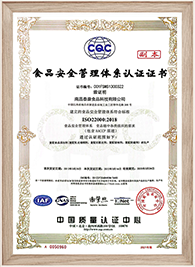
The company has implemented and maintains the HACCP 22000 Food Safety Management System, ensuring reliable products and services. To date, Tellcan has resolved technical challenges for thousands of domestic enterprises and earned prestigious recognitions, including:
 Council Member of China Food Additives Production and Application Industry AssociationStanding Council Member of Jiangxi Food Additives AssociationMember of China Dairy Products Industry AssociationMember of China Bakery & Confectionery Supplementary Materials Industry AssociationMember of China National Federation of Industry & Commerce Bakery AssociationPremium Products & Global Sourcing



Explore our diverse range of application-specific stabilizer systems engineered for the modern beverage industry.


